Archive / Exhibition

μMuography — Dark Matters

When
05 August—02 December 2023
Location
Science Gallery Melbourne
Curators
Mónica Bello and Tilly Boleyn
Collaborators
Arts at CERN · ARC Centre of Excellence for Dark Matter Particle Physics

Dark Matters is an exhibition in collaboration with Arts at CERN and the ARC Centre of Excellence for Dark Matter Particle Physics. The exhibition explores the fundamental essence of life and the universe, and how so much of it remains a mystery to us.

Deep dive into the unseen, the unknown and the unspoken—will we ever fully understand the forces at play in our own lives, both on an individual level and on a planetary and universal scale? Through local and international experimental projects, some developed in conversation with scientists and researchers, the exhibition explores life and all the dark matter that flows through it, under it and collides with it.

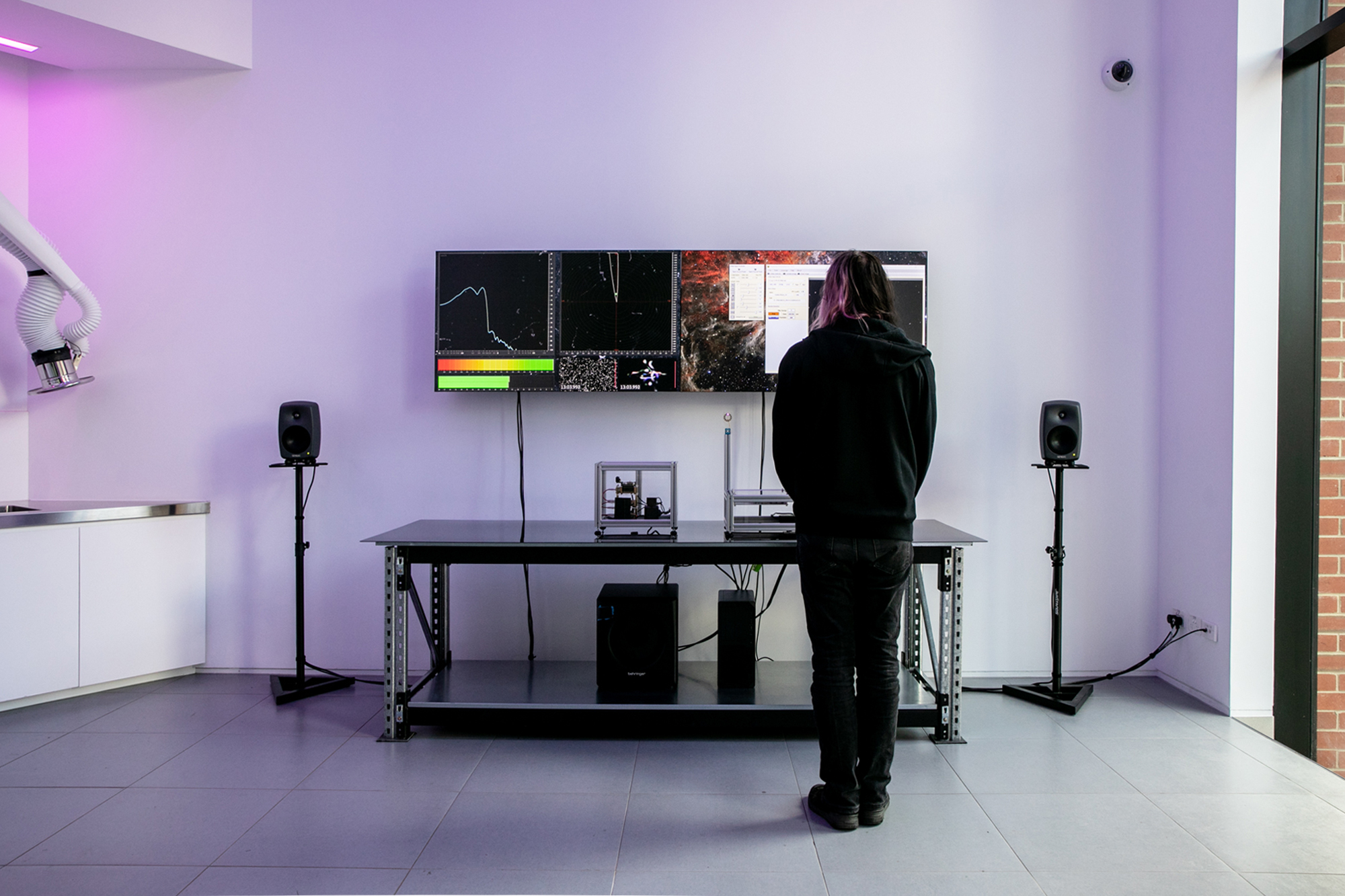
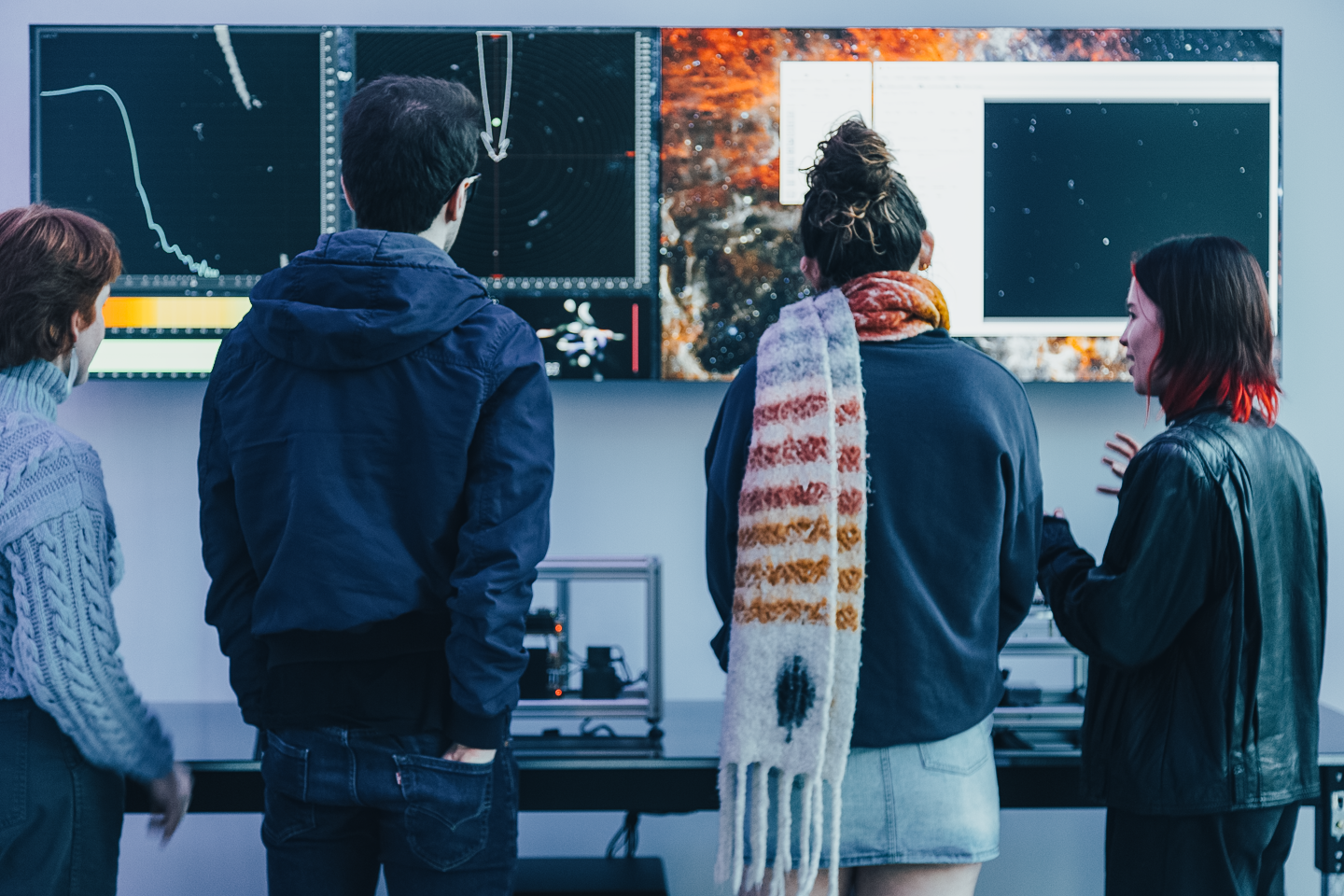
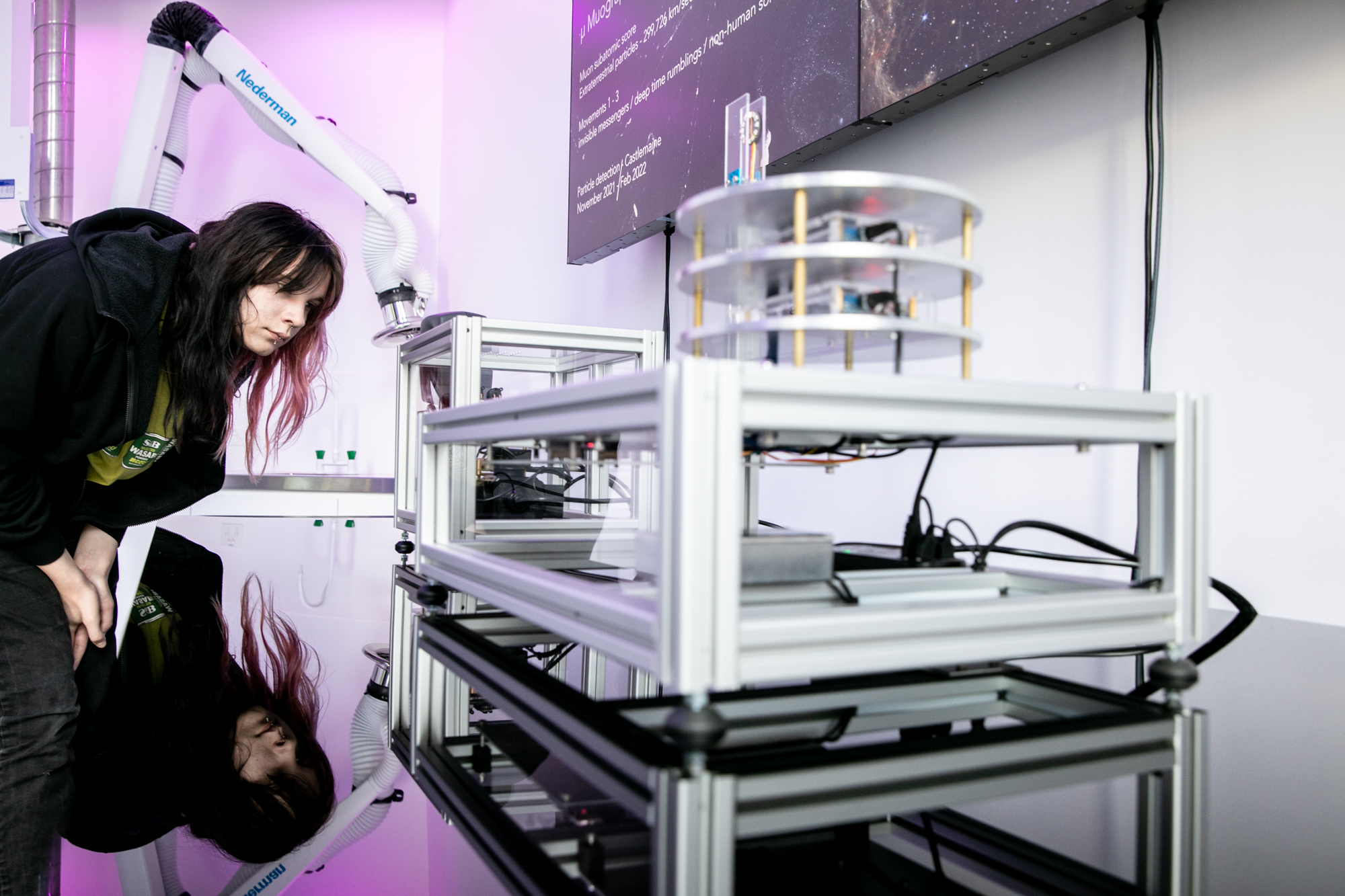
Visitor viewing the μMuography installation at Science Gallery Melbourne
Installation view · Science Gallery Melbourne

Connect to the supermassive picture of the observable universe.

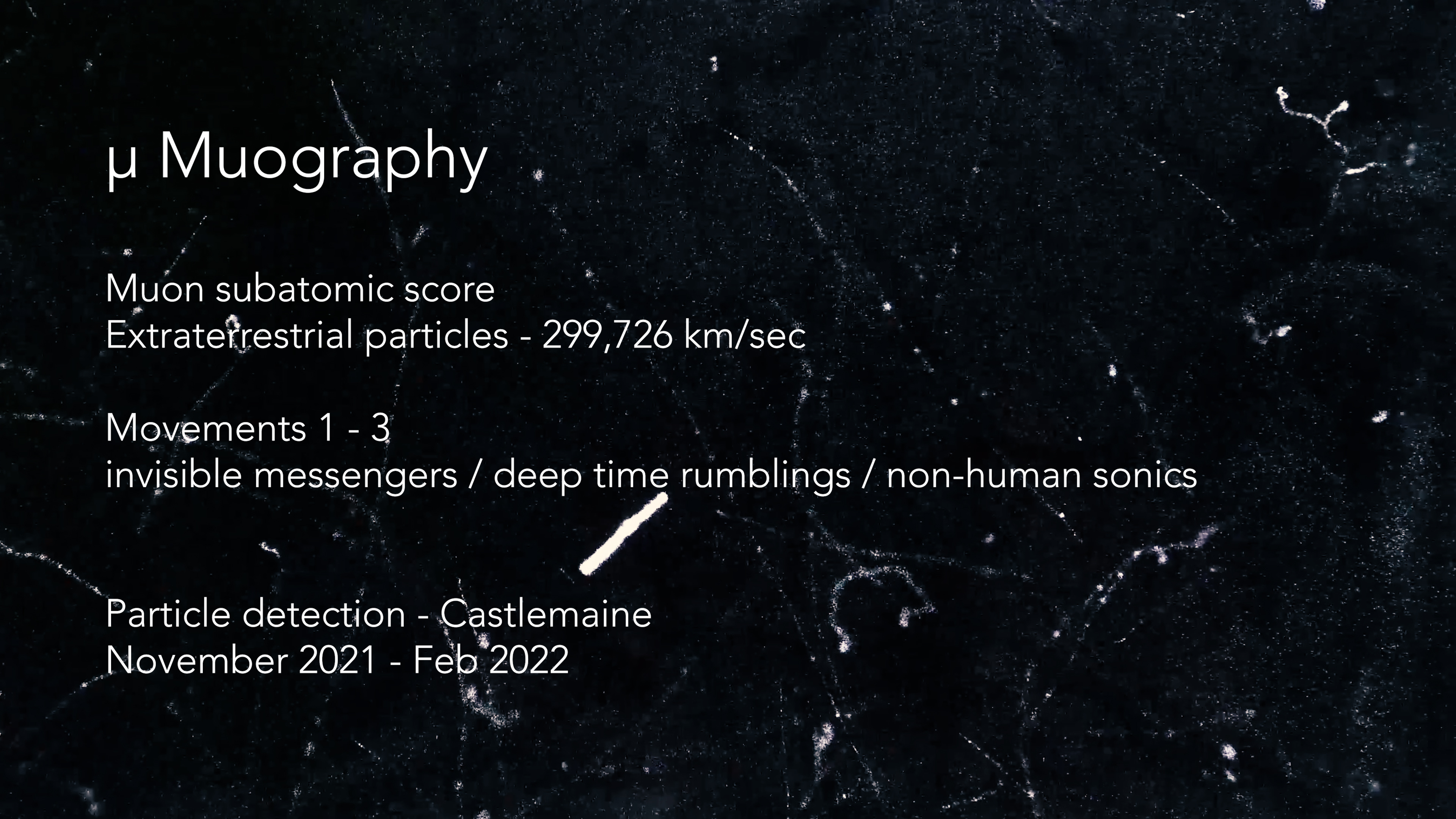
Muon particles are part of the ancient language of matter that makes up everything in existence yet are invisible to human perception. With the use of DIY sensors and LED light pulses indicating the brief presence of a muon, you will be connected to the supermassive picture of the observable universe for 2.2 microseconds. Witness cosmic art in progress as we hand over creative process to some of the oldest known particles in the universe. Each muon strike leaves a delicate trail of electrons in its wake—making a unique cosmological image form over the duration of the exhibition. Jon uses these particle detection images to score the soundtrack for the work, allowing the muons to write the music.

Thanks to Jerry Petry and his excellent Muon Detector project on Hackster IO, and open-source software DIY Webcam Particle Detector developed by Lodovico Lappetito for therimino.com.

Original Muon music scores developed using Olivia Jack’s PIXELSYNTH, a browser-based synthesizer for creating sounds from images and drawings, programmed using JavaScript and Web Audio. PIXELSYNTH is inspired by the analog ANS Synthesizer created by Evgeny Murzin in 1937 for composing musical scores. Used with permission from Olivia Jack.

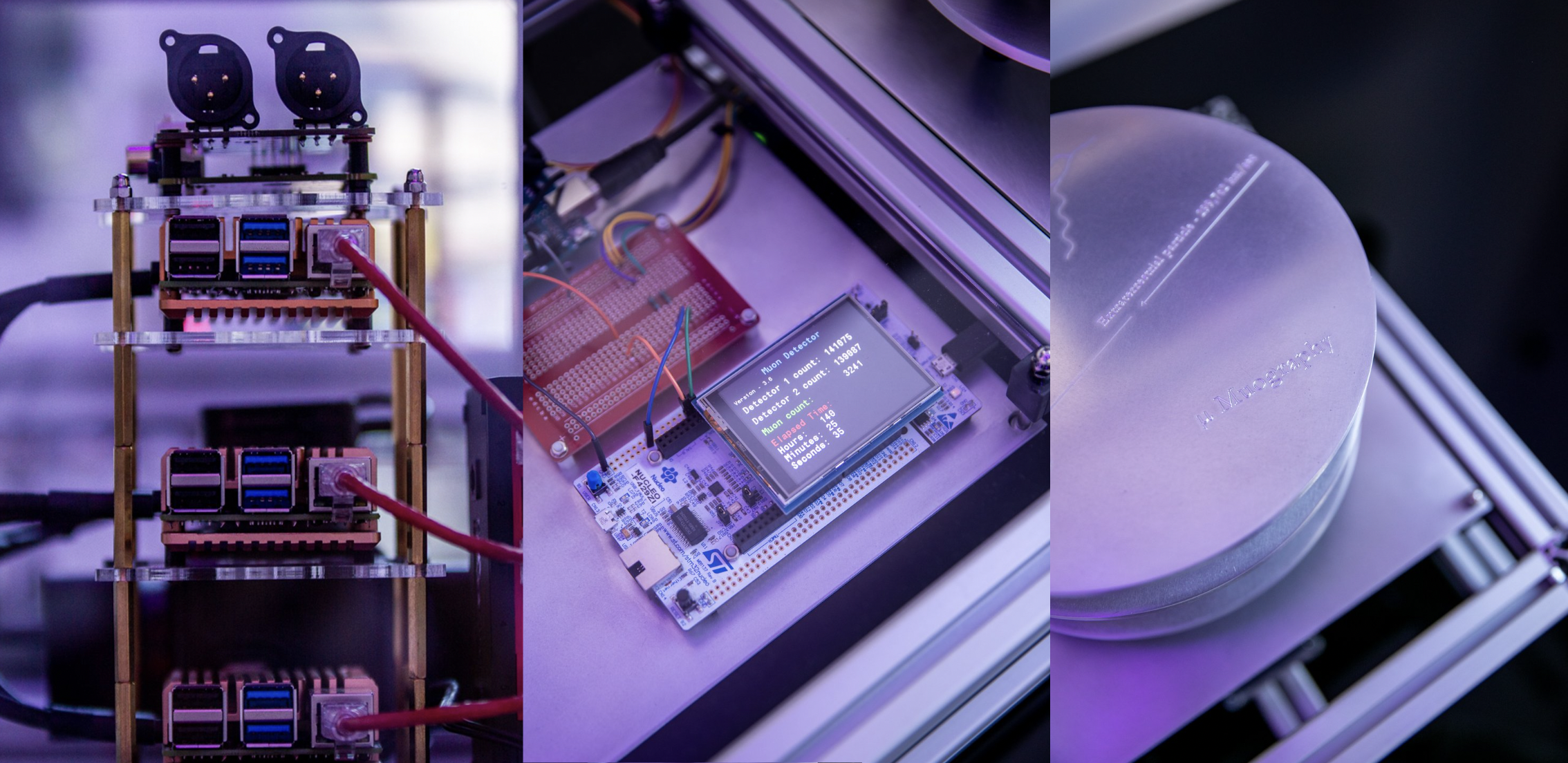
Materials: Experimental Particle Detector (Muon Subatomic Particles, cosmic rays, deep time, aluminium, brass, LED lights, micro controllers, open-source software, PC computer, modified camera sensor, Geiger counters, hand-built circuitry, code, Tarantula Nebula screensaver image by NASA, ESA, CSA, STScI, Webb ERO Production Team).

Open source / DIY repository

Make your own μMuography project—and adapt it.

Dark Matter · Science Gallery Melbourne · 2023

The μMuography device is an experimental DIY particle detector, built in my studio during Melbourne’s lockdown over 2020–2021. Engineered using freely available open-source plans, modified electronics and hand-built circuitry, the device detects high-speed cosmic particles—muons—as they rain down to Earth, translating the resulting data into an artwork.

This repository gathers the practical tools, project references and research trails behind the work. Use them as starting points to build your own detector, make a cosmic camera, turn particle data into sound—or take the project somewhere else entirely.

01 / Cosmic messenger

An invisible particle at 299,726 km per second.

Every second, a muon shoots through your body. A muon forms when a proton travelling through space hits Earth’s atmosphere at 99.9% of the speed of light and breaks down into its subatomic components. The source of these protons is largely unknown: their paths are altered by magnetism and gravity, though they most likely come from supernova explosions millions—or billions—of light-years away.

Muons are part of the ancient, native language of matter that makes up everything in existence, yet are invisible to human perception. μMuography co-opts them into a collaborative art process, making their presence visible and allowing them to become active, non-human agents in the work.

02 / Modular by design

From cosmic camera to performance instrument.

The work connects the invisible building blocks of matter to a human scale. A muon may have travelled for millions of years across billions of kilometres; the device turns those unfathomable distances into a brief light, an accumulated image or a tone that can be encountered directly.

The first iteration, developed for Castlemaine Art Museum, used a modified sensor as a “cosmic camera”, recording muon strikes over the life of the exhibition. For Dark Matter, the modular device developed into an experimental performance tool. Its open structure is intended to be changed, added to and adapted.

Build / translate / adapt

Three essential DIY tools

01 / Detector

Jerry Petrey’s DIY Muon Detector

Retired NASA engineer Jerry Petrey published this accessible build on Hackster.io in 2019. It uses an STM32F429 board and two Geiger counters to detect muons produced by cosmic-ray collisions in the atmosphere, and became the starting point for this work.

Open detector build guide

02 / Image

Lodovico Lappetito’s Webcam Detector

A simple, enjoyable way to convert a webcam into a particle detector. The modified camera sensor records the delicate trails left by energetic particles, offering a practical route into cosmic image-making.

Open webcam detector guide

03 / Sound

Olivia Jack’s PIXELSYNTH

A browser-based synthesizer that creates sound from images and drawings using JavaScript and Web Audio. I slowed its parameters to their lowest settings, recorded hundreds of tonal scores, then arranged them into a composition that moves between melody and subsonic, bodily sound.

Open PIXELSYNTH

Exhibition partners

Research connections

Ideas and provocations Open research trailClose research trail
Listening room / 01
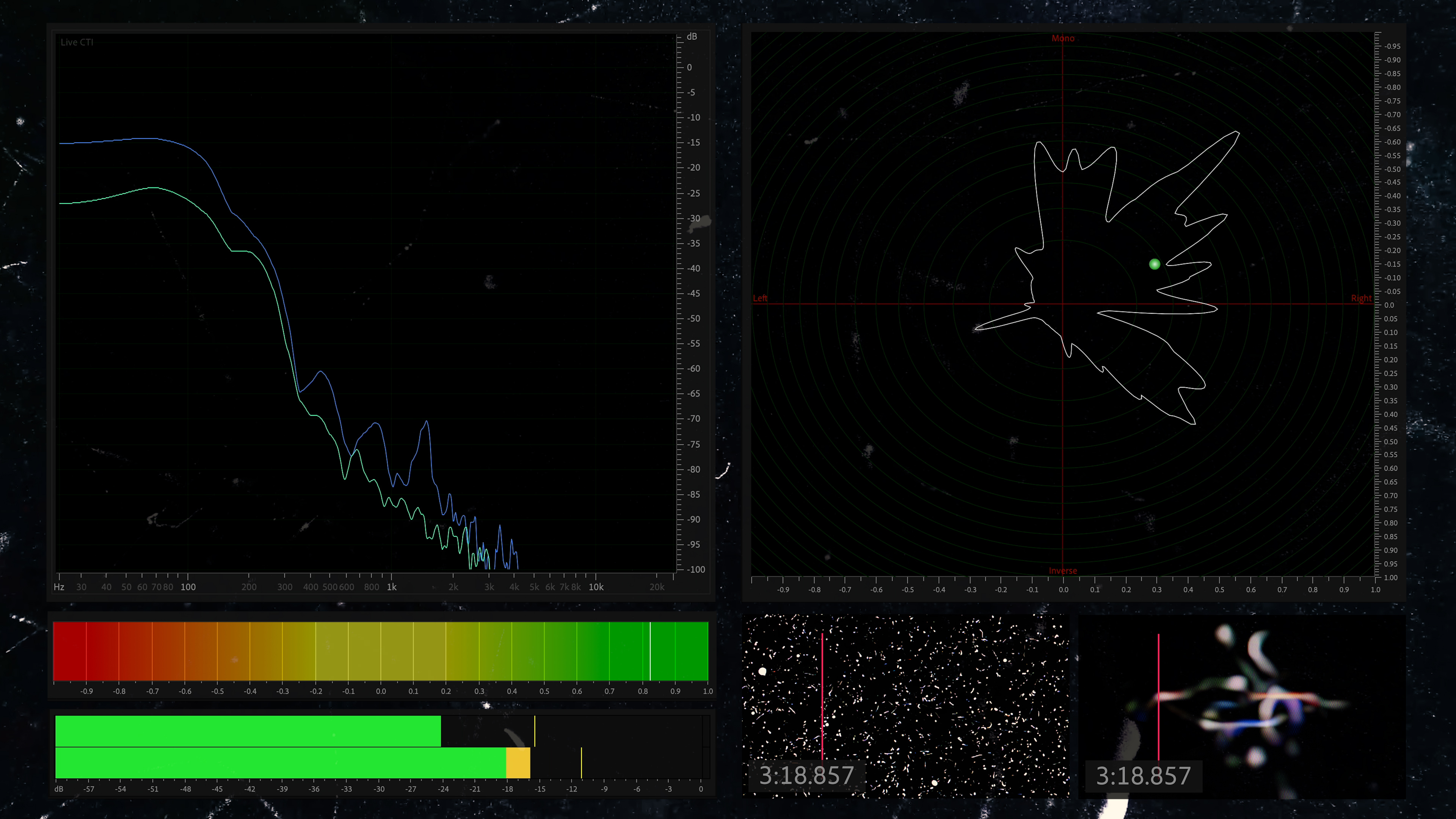
Muon particle visualisation interface

μMuography · Soundtrack

Muon Score

Original music developed from particle-detection images, allowing the muons to write the score.

00:00 / 13:47

13:47 · headphones recommended

← Archive index